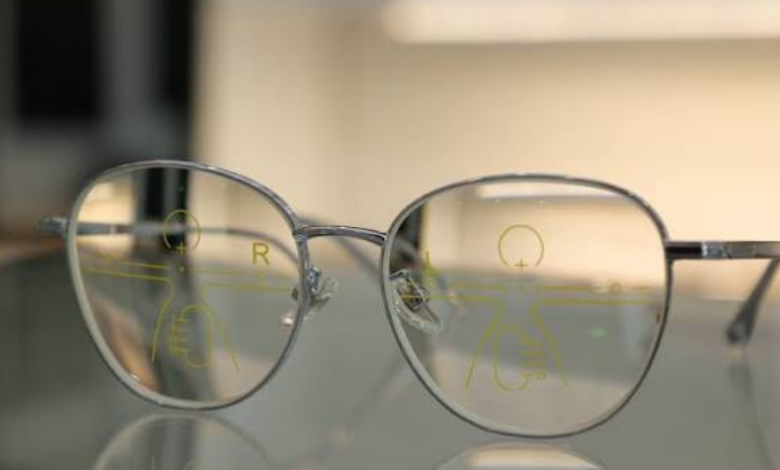
Vision needs rarely stay simple as people get older. Someone might start out needing only distance correction in their twenties, then gradually find themselves struggling with close-up tasks like reading or texting by their forties. This shift often leads to a common question: should you switch between separate pairs of glasses, or invest in a single pair designed to handle multiple vision needs at once?
Multi-lens glasses exist specifically to address this challenge, offering several different approaches to correcting more than one vision issue within a single lens. This article compares the most common multi-lens options to help you figure out which solution actually fits your specific needs.
What Are Multi-Lens Glasses, Exactly?
Multi-lens glasses refer to any eyewear designed to correct more than one type of vision issue within the same lens, typically combining distance and near-vision correction. Rather than switching between separate glasses throughout the day, multi-lens designs consolidate these needs into a single, more convenient pair.
There are several distinct approaches within this category, each with its own structure, benefits, and trade-offs. Understanding these differences is key to choosing the right option.
Bifocal Lenses: The Classic Two-Zone Approach
Bifocal lenses are among the oldest and most recognizable multi-lens solutions. They feature two distinct zones, a larger upper section for distance vision and a smaller lower segment for near vision, separated by a visible line.
This clear division gives wearers an exact sense of where each prescription zone begins, which can make the adjustment period shorter for some people compared to more gradual lens designs. Bifocals also tend to be more affordable, making them a practical choice for anyone seeking effective correction without a higher price tag.
Trifocal Lenses: Adding an Intermediate Zone
Trifocals build on the bifocal concept by adding a third zone specifically for intermediate distances, such as computer screens or dashboard displays. This addresses a common gap in bifocal lenses, where intermediate vision isn’t directly accounted for.
Like bifocals, trifocals include visible lines separating each zone, which some wearers find helpful for precision, while others may notice a brief visual adjustment when shifting their gaze between zones.
Progressive Lenses: A Seamless Alternative
Progressive lenses take a fundamentally different approach by blending multiple prescription powers gradually across the lens, without any visible dividing lines. This creates a smoother visual transition between distance, intermediate, and near vision, often resulting in a more natural viewing experience.
The trade-off is a slightly longer adjustment period for many wearers, since the lack of clear zone boundaries means the eyes need to learn where to look for optimal clarity at each distance. Progressive lenses also tend to be more expensive due to their more complex manufacturing process.
Comparing Cost and Adjustment Period
Cost and adjustment time are often the two biggest factors influencing which multi-lens option makes the most sense. Bifocals are typically the most budget-friendly, with a relatively short adjustment period due to their clearly defined zones. Trifocals sit in a similar range but address intermediate vision more effectively. Progressive lenses, while offering the most seamless visual experience and the most discreet appearance, usually come with a higher price tag and a longer adaptation period.
Lifestyle Considerations for Choosing the Right Option
Daily habits play a significant role in determining which multi-lens solution will feel most comfortable. People who spend considerable time on computer work may find trifocals or progressives more useful, since both account for intermediate distances that bifocals typically miss. Meanwhile, those who primarily switch between distance tasks like driving and close-up tasks like reading may find that bifocals cover their needs effectively without the added cost of more complex lens designs.
Cosmetic preference also factors into the decision for many people. Progressive lenses lack visible lines, which some wearers prefer for a more youthful or seamless appearance, while others don’t mind the visible segmentation of bifocals or trifocals, especially given the cost savings involved.
See also: Why Do Businesses Rely on Commercial Electricians in Shrewsbury?
Frame Considerations Across Multi-Lens Options
Frame selection matters more with any multi-lens design compared to single-vision glasses. Smaller frames may not provide enough vertical space to properly accommodate multiple prescription zones, regardless of which lens type is chosen. Working with an optician to ensure proper frame height and lens alignment is an important step across all multi-lens categories, not just one specific type.
Making the Final Decision
Ultimately, choosing between bifocal, trifocal, and progressive lenses comes down to balancing budget, visual needs, and personal comfort with adjustment periods. There’s no universally “best” option, since the right choice depends heavily on individual lifestyle factors, daily visual demands, and how much value someone places on a seamless appearance versus a more affordable, clearly defined lens structure.
Frequently Asked Questions
What’s the main difference between bifocal and progressive lenses?
Bifocals have a visible line separating two vision zones, while progressives blend multiple prescriptions gradually without any visible division.
Are trifocal lenses better than bifocals for computer use?
Yes, trifocals include an intermediate zone specifically designed for distances like computer screens, which bifocals typically don’t address.
Why do progressive lenses cost more than bifocals?
Progressive lenses require more complex manufacturing to create a seamless gradient between prescription powers, increasing production costs.
How long does it take to adjust to progressive lenses?
Adjustment periods vary, but many wearers need two to four weeks to fully adapt to the lack of visible zone boundaries.
Does frame size matter when choosing multi-lens glasses?
Yes, smaller frames may not provide enough space for multiple prescription zones to function properly, regardless of lens type chosen.
Choosing the right multi-lens solution ultimately depends on weighing cost, visual demands, and personal comfort with different lens designs, making it worth discussing your specific daily routine with an optician before deciding.