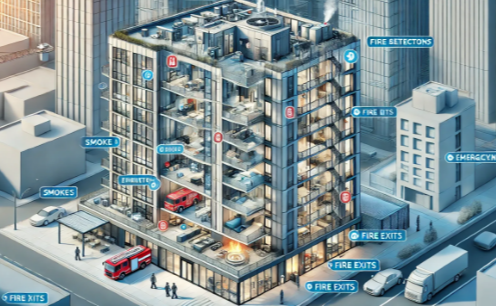
Fire safety is a critical aspect of managing public spaces and high-risk occupancies. Buildings like shopping malls, hospitals, schools, hotels, industrial plants, and entertainment venues are particularly susceptible to fire hazards due to high occupancy levels, complex layouts, or the presence of flammable materials. Conducting a Fire Risk Assessment for Public and High-Risk Occupancies ensures the safety of occupants, protects property, and complies with legal and regulatory requirements.
What is Fire Risk Assessment?
A Fire Risk Assessment (FRA) is a systematic evaluation of a building or facility to identify potential fire hazards, assess the likelihood of fire incidents, and implement measures to reduce or eliminate risks. It involves examining both the structural and operational aspects of a building, including emergency procedures, fire detection systems, and staff preparedness.
The main objectives of a fire risk assessment are:
- Identifying fire hazards – Sources of ignition, flammable materials, electrical faults, or human activities that can trigger fire.
- Evaluating risk – Understanding the likelihood of a fire occurring and its potential impact on occupants and property.
- Implementing preventive measures – Installing fire detection systems, sprinklers, and fire extinguishers, and maintaining clear evacuation routes.
- Ensuring compliance – Meeting local fire safety regulations and industry standards.
Importance of Fire Risk Assessment in Public and High-Risk Occupancies
Public and high-risk occupancies present unique challenges due to the large number of people, high activity levels, and critical services they provide. Effective fire risk assessment in these environments is essential for the following reasons:
- Protecting human life: High occupancy increases the risk of injury or fatalities in case of a fire. A proper assessment ensures safe evacuation routes and emergency plans.
- Property protection: Fire can cause significant financial loss and disrupt services. Risk assessment identifies vulnerable areas and recommends preventive measures.
- Legal compliance: Fire safety regulations require public and high-risk facilities to conduct regular fire risk assessments. Failure to comply can result in fines, penalties, or legal liability.
- Operational continuity: Ensuring fire safety reduces downtime and disruption, especially in critical facilities like hospitals and industrial plants.
Steps Involved in Fire Risk Assessment
A comprehensive fire risk assessment for public and high-risk occupancies involves several structured steps:
1. Identify Fire Hazards
- Sources of ignition: Electrical equipment, heating systems, kitchen appliances, and smoking areas.
- Flammable materials: Paper, chemicals, fuels, and textiles.
- Human factors: Unsafe practices, overcrowding, and negligence.
2. Identify People at Risk
- Occupants: Staff, visitors, patients, and students.
- Special needs groups: Elderly, disabled, children, or non-English speakers who may require additional assistance during evacuation.
3. Evaluate, Remove, or Reduce Risk
- Implement fire-resistant building materials.
- Maintain fire doors, extinguishers, and sprinkler systems.
- Ensure electrical wiring and appliances are regularly inspected.
- Control ignition sources and storage of flammable substances.
4. Record, Plan, and Train
- Maintain a fire safety log with identified hazards and mitigation measures.
- Develop a fire emergency plan with clear evacuation routes.
- Train staff on fire safety procedures, including the use of extinguishers and assisting vulnerable occupants.
5. Review and Update
- Regularly review fire risk assessments to account for structural changes, new equipment, or changes in occupancy patterns.
- Update emergency plans and conduct periodic fire drills.
Special Considerations for High-Risk Occupancies
High-risk occupancies such as chemical plants, warehouses with flammable materials, and hospitals require additional precautions:
- Advanced fire detection systems: Smoke, heat, and flame detectors.
- Automatic suppression systems: Sprinklers, gas suppression systems, and fire retardant coatings.
- Segregation of hazards: Proper storage and separation of flammable or hazardous materials.
- Emergency power backup: Ensures fire alarms and evacuation systems remain operational during power outages.
Fire Risk Assessment Benefits
- Reduces the likelihood of fire incidents.
- Minimizes potential damage to property and equipment.
- Ensures safe evacuation and reduces casualties.
- Enhances staff awareness and preparedness.
- Demonstrates compliance with legal requirements.
Read Also: The Reasons To Invest In a Quality UPS For Home & Business Here In Australia
Conclusion
A Fire Risk Assessment for Public and High-Risk Occupancies is not just a regulatory requirement—it is a crucial safety measure that protects human life, property, and operational continuity. By systematically identifying hazards, assessing risks, implementing preventive measures, and maintaining preparedness through training and drills, facility managers can significantly reduce fire-related risks. Regularly reviewing and updating fire risk assessments ensures the building remains safe as occupancy, operations, and hazards evolve over time.
FAQs
1. How often should a fire risk assessment be conducted?
Fire risk assessments should be reviewed annually or whenever significant changes occur, such as renovations, changes in occupancy, or introduction of new equipment or hazardous materials.
2. Who should carry out a fire risk assessment?
Ideally, it should be conducted by a qualified fire safety professional. However, building owners or managers with appropriate training can perform basic assessments, especially in smaller facilities.
3. Are fire risk assessments legally required?
Yes, most countries require public and high-risk facilities to conduct fire risk assessments in compliance with local fire safety regulations.
4. What is the difference between public and high-risk occupancies?
Public occupancies are spaces accessible to the general public, such as malls or theaters. High-risk occupancies involve significant hazards or critical operations, like hospitals, chemical plants, or industrial facilities.
5. Can fire risk assessment prevent all fire incidents?
While it cannot guarantee complete prevention, fire risk assessments significantly reduce the likelihood of incidents and ensure efficient response to minimize damage and casualties.